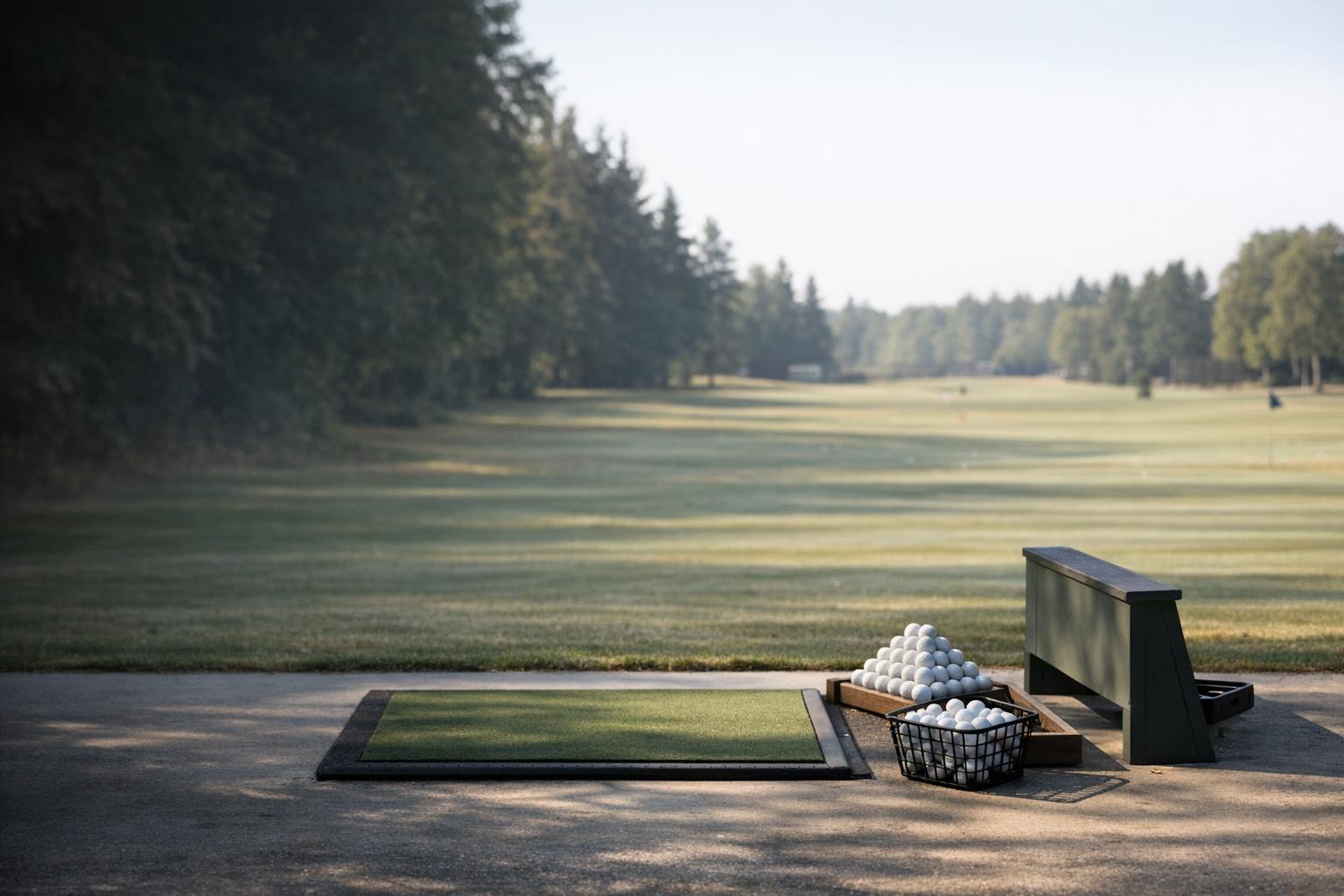
An outdoor range session is most useful when the numbers answer a defined question. Establish the target, ball type, device placement, and data settings before hitting. Then keep a record that distinguishes a change in your shot from a change in the conditions or measurement setup.
Choose a question the range can answer
Decide whether you are checking carry gaps, comparing a swing cue, or practicing a specific landing window. Write the question before warming up. An unrestricted session can still be enjoyable, but it should not be mistaken for a controlled comparison. Choose one club or a manageable set of clubs that directly serves the question.
Ask the facility whether your intended monitor placement is permitted. Check the available space behind the ball and the route used by neighboring players. Do not put equipment in a walkway to satisfy a distance requirement. If the bay cannot support the manual's layout, use a different bay or facility. Convenient access does not justify collecting data from an unsupported setup.
Establish one target line
Select a visible target and establish the device's reference line using its documented alignment procedure. Garmin's R10 instructions align the monitor, tee, and target on the red reference line.[1] Other models need their own procedure. The alignment guide explains how to keep the intended target consistent with the coordinate system used by the device.
Do not change targets casually halfway through a comparison. If you do change them, re-establish alignment and start a new shot group. Record whether your target represents a landing point or a direction only. A flag seen from an angled bay can be useful for aiming without serving as a reliable distance reference. Keep those roles separate in your notes.
Identify the ball and hitting surface
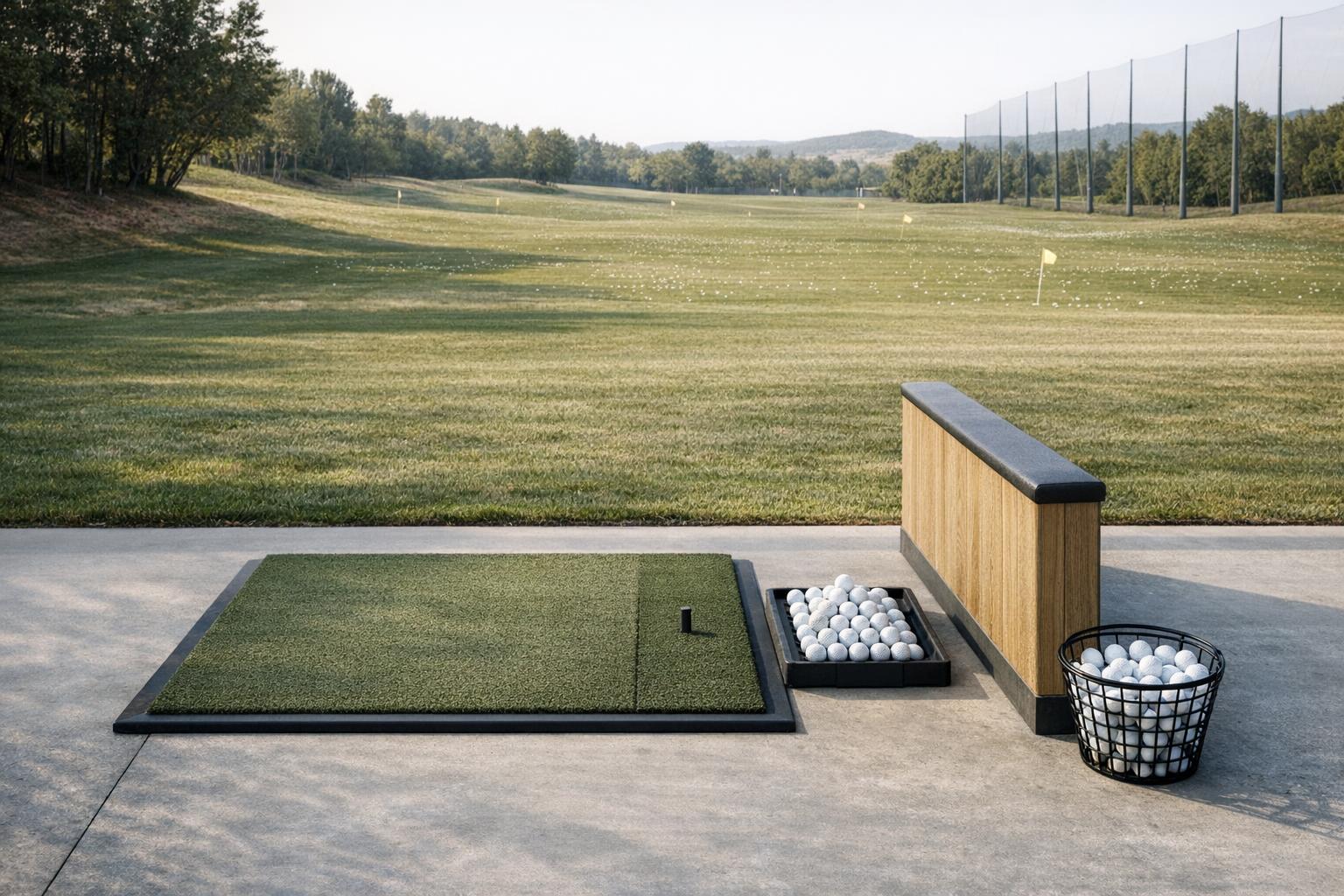
Record the range ball type if the facility identifies it, and note whether the bucket contains visibly mixed balls. Do not assume that a range ball matches your normal playing ball. If the session concerns small equipment differences, ask whether you can use a consistent, approved ball supply. Never retrieve balls from an active range to create one.
Record mat or grass use and whether you changed hitting positions. Keep the same surface for the comparison where practical. If you cannot control the balls or conditions, narrow the question: the session may still help you practice a routine or observe a broad pattern. It should not become a precise promise about the yardage of your course ball under different circumstances.
Separate observed and standardized flight
Trackman explains that normalization models a shot under calm conditions at a selected altitude and temperature.[2] A normalized carry value therefore answers a different question from where the current ball actually lands. Check the displayed mode before interpreting a discrepancy with a range marker. The flight conditions guide develops this distinction.
Save both the setting and the result where your system allows it. Write down wind observations and whether a conversion feature was enabled. Do not apply your own percentage adjustment on top of an undocumented software conversion. If the app does not explain the current result clearly, label it as an app-reported distance and avoid giving it a more specific meaning than the documentation supports.
| Result | What it describes | Use it for |
|---|---|---|
| Observed | Where today's ball actually lands | Comparing with range markers |
| Normalized (Trackman) | Modeled calm-air flight at a selected altitude and temperature | Controlled comparisons across days |
Keep the ordinary misses visible
Define the shot group before you begin. You might collect a modest fixed number of intended stock swings after warming up, then review the center and spread of those results. That is a suggested practice structure, not a statistical guarantee. Keep the count with the summary so that a short sample does not look more conclusive than it is.
Separate capture failures from poor golf shots. A shot that the device did not record belongs in an operational note. A recorded mishit still says something about your current pattern unless you explicitly set a different question. Avoid deleting inconvenient shots merely because they lower the average. Our practice data guide shows how to label useful subsets without hiding the full session.
Leave with a decision and a record
At the end, write a short conclusion tied to the initial question. Examples include practicing a narrower wedge window again, checking a suspected carry gap in a second session, or taking a recurring pattern to an instructor. A single attractive shot is not a reason to rebuild a bag. If the results are unclear, say what would make the next session more informative.
Save alongside the shot file:
- Date and location
- Clubs and ball description
- Settings
- Intended target
- Setup changes
Distinguish your interpretation from the recorded numbers. Repeat important comparisons on another day before treating a small difference as durable. The useful output is a defensible next action and enough context to compare it later, rather than a screenshot of your longest shot.